Friday 19 November 2021
Tera Academy
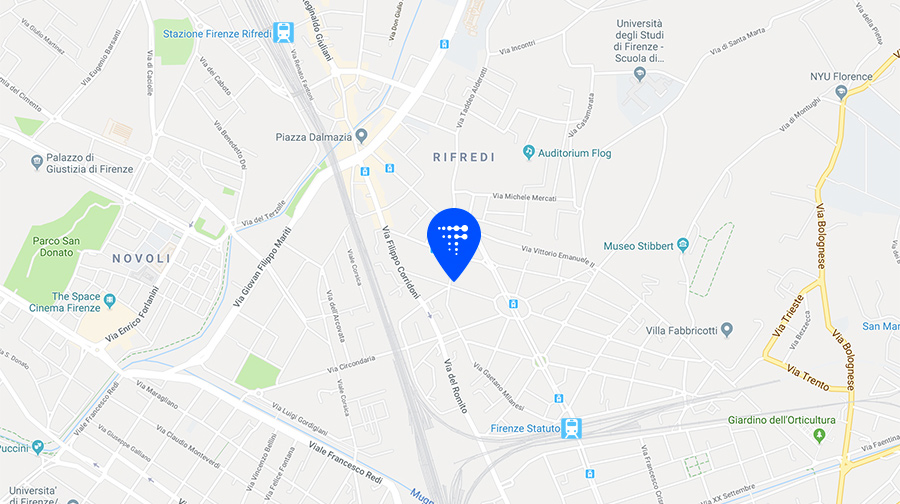
Via Riguccio Galluzzi, 22
50134 Florence
TheRegulatory Authority for Energy, Networks and the Environment (ARERA) has introduced a number of innovations with Resolutions 276/2017/R/eel and 894/2017/R/eel for private electricity grids that supply consumption units (CUs) of entities of a legal nature distinct from the entity that has the area at its disposal and is the sole owner of the point of connection to the public grid (POD).
In practice, we are in the situation where the party to whom the POD is registered takes the entire energy demand of the area from the public grid and returns part of it to the UCs below, under various forms of commercial agreement. This situation is usual in shopping centres, railway stations, airports and port contexts.
Such plant configurations are no longer admissible as they imply the presence, within the area of a third party, of users "hidden" from the visibility of the public electricity system and, as such, not subject to the application of the fixed and power quotas of the transmission tariffs.
ARERA has clarified that a CU is defined as 'a set of electricity consumption facilities connected to a public grid, including through private electricity grids or lines, such that the total electricity consumption of the aforementioned set is used for a single use or production purpose'. The CU normally corresponds to a real estate unit, as defined by the cadastral regulations and endowed with its own functional and income autonomy. It is possible to aggregate several building units into a single CU, only in the particular cases provided for by the Testo Integrato dei Sistemi di Distribuzione Chiusi (TISDC), which regulates connection, metering, transmission, distribution, dispatching and sales services in the case of Closed Distribution Systems (SDC) and Other Closed Distribution Systems (ASDC).
The applicability to port areas was challenged by some operators who had considered that discipline not applicable due to the prevalence of special laws on port matters with respect to Community and national rules on electricity markets.
In Resolution 558/2019, ARERA responded by deeming these criticisms to be unfounded and thus including not only port networks, but also airport networks, in the TDI framework.
ARERA, after having granted several extensions, has definitively specified that from 1 January 2022 also electricity distribution networks in port and airport areas will have to qualify as TDCs.
The regulation therefore provides for the qualification of the "Closed Distribution System (SD C) following a specific request to be submitted to ARERA". The various services provided to individual users within the TDC must be regulated and regulated in total autonomy by the TDC operator, without prejudice to the principles and criteria provided by ARERA to regulate the methods of providing the metering service within the TDC and the dispatching service, as well as the methods of applying to individual TDC users (through the sales companies) the transmission and distribution tariff fees and the fees to cover general system charges.
Tera has been permanently monitoring numerous TDIs for many years. To check your network or for more information on TDI, arrange a meeting with our experts by calling +39 055 577 297 or writing to academy@teraenergy.com
Where are we
Via Riguccio Galluzzi, 22 - 50134 Florence